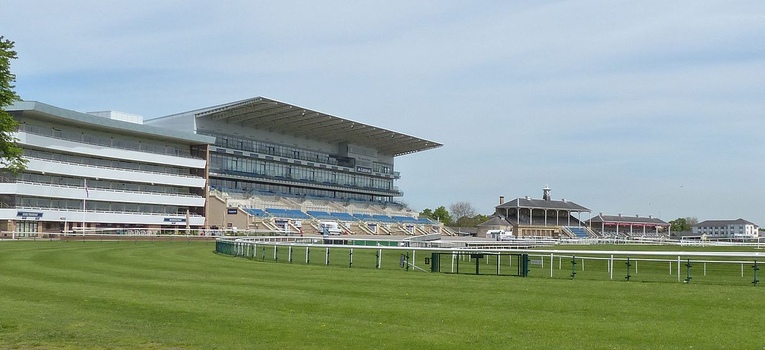
One of the most famous racecourses in Britain, Doncaster forms part of the history and very fabric of the sport in this country.
Colloquially known as Town Moor, Doncaster Racecourse is dual purpose. It’s famous mostly for its top-class Flat racing, though in the winter months there is great jumping action on the track as well.
Donny is famous for hosting the first and last Flat turf meetings of each season. They feature the Lincoln Handicap and the November Handicap respectively, while it also stages a prestigious Group 1 for juveniles and the last Classic of the season, the St Leger.
Key Information
- Address – Doncaster Racecourse, The Grandstand, Leger Way, Doncaster, DN2 6BB.
- Owner – Arena Racing Company.
- TV Station – Sky Sports Racing.
- Type – Flat and National Hunt.
- Surface – Turf.
Track Details
Doncaster’s tracks are absolutely first class. The track handles plenty of racing, with some of the better Flat action staged here from March to November with the jumps taking over in between.
Flat Course

The Flat track at Doncaster is left-handed and has always been seen as very galloping in nature.
The course is basically flat all the way around and remains fair to just about all. There is a slightly uphill run around ten furlongs from the line, but other than that there is little in the topography for jocks to worry about.
Doncaster has a straight mile on which the Lincoln is run. Events between five furlongs and the mile are all run on the straight track, with a separate one-mile start on the round course situated in a chute.
Conditions are rarely soft here. While it shares some characteristics with York, the drainage here is such that the ground is very often good or quicker and runners tend to see things out nicely.
Flat Track Analysis
The feedback from jockeys tends to back up the fact that Doncaster is among the fairest tracks in the country.
The slight climb over Rose Hill is acknowledged, but other than that it is a level, galloping surface appreciated by riders.
It can present a decent test, but nothing too stark. The form tends to stand up well, for sure. Not only will you need to be good to win here within your division, but also the form coming out of Doncaster will tend to hold up in future.
On the straight course, there isn’t too much of a bias. The far side can do well, plenty of jockeys tend to latch onto the nearside rail, while many races are won right down the middle.
Jumps Course

Left-handed, naturally, once again the jumps track is basically flat.
Given the excellent drainage and the fact soft ground isn’t as prevalent here in the winter, those with a little speed tend to be favoured despite the track riding like a galloping one.
Over 2 to 2½ miles especially, look out for those clocking good times and/or showing up well on speed figures as a turf of foot could come in very handy.
Jumps Track Analysis
Though that turn of foot is often needed, many experienced jockeys tend to feed back that they prefer sitting up near the pace at Doncaster.
A strong traveller is needed then, and you can spot this either visually or, as mentioned above, by checking speed figures.
Naturally, if the ground does come up soft then a clever jockey will stay calm, remain patient and ride for a late run. In general though, those up with the pace will do best so if your horse has tended to need to be ridden some way from home then this is probably not the track for them.
Visiting Doncaster Racecourse

Doncaster sits within South Yorkshire and so is essentially within a densely populated area. It is close to airports, is one the main train line and is within reach of the M1, A1(M), M62 and M18.
How to Get to Doncaster
If you’re driving to Doncaster, the track is very easy to find.
There are links from junction 32 of the M1, junctions 3/4 of the M18, junction 36 of the A1(M) as well as from the M62. Simply head for Doncaster and then look for the signs for the racetrack which are easy to follow.
There is free car parking for all meetings other than the Leger Festival in September.
As the drinks tend to flow at Donny on race days, you may want to leave the car behind and use the shuttle bus service provided.
The shuttle bus runs between the Doncaster Interchange at the train station to the racecourse, only on proper race days and not for other functions.
Check out the time the track opens for your meeting. The shuttle bus will generally leave the Interchange at around the time the gates open, continuing regularly until around half an hour before the first race is due off.
Designated stop-offs for the return journey can be accessed, the bus running from just after the second last race until an hour after the final race. If a concert or other entertainment is provided post-racing, the shuttle bus continues until that has concluded.
Doncaster has the advantage of being accessible from just about anywhere in the country via train. It sits on the east coast mainline, accepting direct arrivals from Kings Cross, Leeds, Sheffield, Newcastle, Hull and Edinburgh among many others, with connections available from all corners.
Where to Stay
There are enough rooms around Doncaster itself to satisfy demand on most race days, though the town is also close enough to Leeds, Manchester and Sheffield if you fancy staying elsewhere.
One thing you may notice on TV coverage of Doncaster as the horses cross the line is the on-site hotel.
The hotel is ideal for people looking to stay before and/or after race meetings, while other attractions such as Yorkshire’s Wildlife Park and the Lakeside Shopping Village are also nearby. This makes the hotel ideal for racegoers coming with family members or who are just looking to make a whole weekend of it.
Major Events at Doncaster
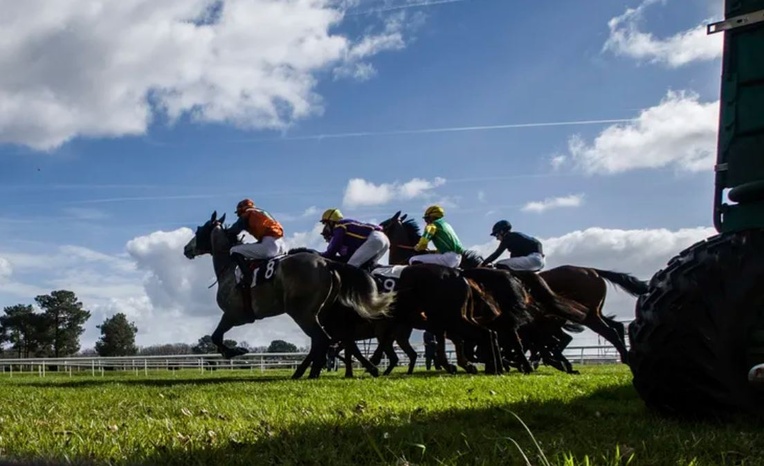
Doncaster hosts several important events during the year, especially on the Flat, a sphere in which Town Moor’s races are particularly historic and important.
Many future top horses come to Doncaster to run in novice races, maidens and handicaps, but these are the races of most significance run every year, divided by code:
Major Jumps Races
| Race | Type/Grade | Distance | Month |
|---|---|---|---|
| Summit Juvenile Hurdle | Hurdle, 3yo Only, Grade 2 | 2m½f | December |
| December Novices’ Chase | Novices’ Chase, 4yo+, Grade 2 | 3m | December |
| Great Yorkshire Chase | Handicap Chase, 5yo+, Listed Race | 3m | January |
| Yorkshire Rose Mares’ Hurdle | Hurdle, Mares Only, 4yo+, Grade 2 | 2m½f | January |
| River Don Novices’ Hurdle | Novices’ Hurdle, 4yo+, Grade 2 | 3m½f | January |
| Grimthorpe Chase | Handicap Chase, 5yo+, Class 2 | 3m2f | March |
Major Flat Races
| Race | Type/Grade | Distance | Month |
|---|---|---|---|
| Brocklesby Stakes | 2yo Only, Conditions Stakes, Class 4 | 5f | March |
| Cammidge Trophy | 3yo+, Listed Race | 6f | March |
| Doncaster Mile | 4yo+, Listed Race | 1m | March |
| Lincoln Handicap | Handicap, 4yo+, Class 2 | 1m | March |
| Flying Scotsman Stakes | 2yo Only, Listed Race | 7f | September |
| Scarborough Stakes | 2yo+, Listed Race | 5f | September |
| Sceptre Stakes | 3yo+, Fillies & Mares, Group 3 | 7f | September |
| Park Hill Stakes | 3yo+, Fillies & Mares, Group 2 | 1m6½f | September |
| Flying Childers Stakes | 2yo Only, Group 2 | 5f | September |
| Doncaster Cup | 3yo+, Group 2 | 2m2f | September |
| May Hill Stakes | 2yo Fillies Only, Group 2 | 1m | September |
| St Leger | 3yo Only, Group 1 | 1m6½f | September |
| Champagne Stakes | 2yo Only, Group 2 | 7f | September |
| Portland Handicap | 3yo+, Handicap, Class 2 | 5½f | September |
| Park Stakes | 3yo+, Group 2 | 7f | September |
| Futurity Trophy | 2yo Only, Group 1 | 1m | October |
| November Handicap | 3yo+, Handicap, Class 2 | 1m4f | November |
As you can see, the majority of Doncaster’s big races are during the St Leger Festival. The Leger is the oldest Classic and we have more information on that below.
The Brocklesby, although only a Class 4, is famous and typically provides the juveniles with their first opportunity of the season, the winner often then being aimed towards Royal Ascot and other major meetings.
About Doncaster Racecourse
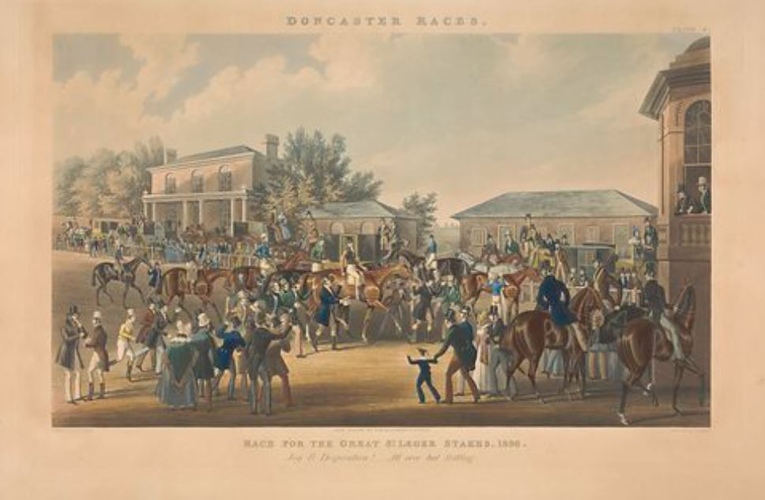
Doncaster is one of the oldest, true horse racing venues in the country. Race meetings go back on record here to the 16th century and so it’s no surprise that the oldest Classic began here.
Racing initially took place in a less orderly fashion and in fact the local authorities attempting to ban it in 1600. Admitting defeat, they eventually marked out a proper racecourse in 1614 and Doncaster hasn’t looked back.
In 1992, Britain’s first ever Sunday race meeting was held at Doncaster. Despite the fact that betting was not allowed at the Sunday showpiece, a bumper crowd of 23,000 showed up as if to show their approval at racing becoming a seven-days-a-week sport.
Development has been ensured by current owners ARC in recent times. £34 million was invested recently to keep Doncaster where it needs to be, with a five-storey grandstand and top-class hospitality suites added, befitting of a Group 1 and Classic venue.
As we mentioned, Doncaster hosts the traditional start and end of the Flat turf season in Britain.
The St Leger
 The St Leger Stakes is not only a Group 1 race, but is the oldest Classic in Britain. It is also the last of the five Classics to be run each year after the 2000 Guineas, 1000 Guineas, the Oaks and the Derby.
While the fillies tend to stick to the 1000 Guineas and Oaks with the colts running in the 2000 Guineas and the Derby, the St Leger truly is for all. It’s also the longest of the Classics and further than 1¾ miles.
The St Leger was established back in 1776, with one famous jockey of yesteryear claiming that “the fastest horse wins the Guineas, the luckiest wins the Derby, but the best wins the St Leger”.
Although the race fell out of fashion with some, especially with breeding in mind, recent winners have been real stars.
They include Hurricane Lane (Derby third, winner of the Irish Derby and Grand Prix de Paris), Logician, Leading Light and Brian Boru.
The Leger is the final leg of both the fillies and colts Triple Crown. The great Nijinsky was the last colt to win all three available Classics way back in 1970, while the last filly to achieve the feat was Oh So Sharp in 1985.