There are so many bets to choose from, often coming with weird and wonderful names. Some are easy to grasp, but one of the more confusing punts available online is the ‘up-and-down’ bet.
Up-and-Down Betting Explained

Initially, up-and-down bets can seem a little perplexing but we’re aiming here to give some examples to better explain how they work and how you can use them to perhaps gain more from smaller stakes.
Up-and-down betting involves punters making two selections and two different bets across both of those selections. In each selection, the second bet is reliant on the first selection winning.
The reason many turn to up-and-down bets is because, should both selections win, your return is bigger than if you’d placed two separate single bets. On the flip side, just the one winner reduces your return so you’d need to be fairly confident about both.
Breaking Down Up-and-Down Bets
We’re splitting this bet into two sections.
Firstly, we’re placing a theoretical wager on what we’ll call Pick A. If that bet wins, we keep our winnings from that and place another bet for the same initial stake on Pick B using our winnings from Pick A.
For part II, we do the same again but in reverse. We place a single bet on Pick B. If it happens to win, we keep the winnings and place a bet for the same stake on Pick A using the winnings from Pick B.
Doing this means we double the cash we can potentially win by using two different stakes.
Types of Up-and-Down Bets
The two up-and-down bets most popular with punters are known as SSA and DSA bets.
SSA, or Single Stakes About, are named such because the second stake is the same level as the initial one. DSA, or Double Stakes About, means that the second stake is doubled as the name would suggest.
SSA Example
 For this example, we’re betting with a total bank of £20. We’re going to wager on two different horses running in separate races. Each horse is available at odds of 5/1 for the sake of simplicity, though we’ll show you the calculation anyway.
Now, you may want to place two different £10 bets on each horse. If they win, you’d be £100 up of course but if you’d used that stake money to place an up-and-down bet you could bet better off.
Here’s how:
- For part one, we place a £10 single on Horse 1 @ 5/1. This would lead to a return of £60.
- We keep the £50 winnings, placing the initial £10 stake back on Horse 2.
- £10 on Horse 2 @ 5/1 means a return of another £60.
- If successful, the total winnings are £100.
And now for the second part:
- A £10 single on Horse 2 @ 5/1 means another return of £60.
- Once again we keep the £50 winnings made here and place the same original stake (£10) on Horse 1.
- The £10 on Horse 1 means another return of £60.
- The total winnings once again are £100.
This means that for the same original bank of £20 we now have winnings of £200 rather than £100.
DSA Example
 Even more interesting to the slightly more adventurous up-and-down bettor is the Double Stakes About bet. Once more, we’re betting with a total of £10. We’ll stick to the same two horses going off at 5/1 in different races.
- Place a £10 single on Horse 1 @ 5/1. This would lead to a return of £60.
- Keep your £50 winnings here, then double the original stake from £10 to £20 when backing Horse 2.
- A £20 bet on Horse 2 @ 5/1 would mean a return of £120.
- Here, the total winnings are now £150.
From here, we move on to the second part:
- Place a £10 single on Horse 2 @ 5/1 for the same return as before, £60.
- We keep the £50 winnings and double the stake, betting £20 on Horse 1.
- £20 on Horse 1 @ 5/1 means a return once again of £120.
- The total winnings again are £150.
Doing it this way, our total winnings for backing the same two horses with an initial £20 is now up to £300. Whenever you up the stakes, the risks are of course higher should you lose. Risk v reward however is always a major part of betting.
Is Up-and-Down Betting Worthwhile?

There are, forgive the awful pun, ups and downs with all betting types and that includes this one for certain.
As we’ve explained above, up-and-down betting can indeed be more rewarding when betting on two horses. The absolute key here, however, is information and/or knowledge.
This is not a ‘system’.
Up-and-down betting won’t help you be successful in itself. You still have to know which horses to pick out in the first place and you should never, ever forget that.
Assuming you are already confident about two particular horses, the you can use up-and-down betting techniques as a way to increase your returns without the need to increase your initial stake.
As always, your bets are lost if both legs lose anyway. Up-and-down betting doesn’t provide you with a magic punting wand.
Do I Need to Bet on Horses at Bigger Prices?
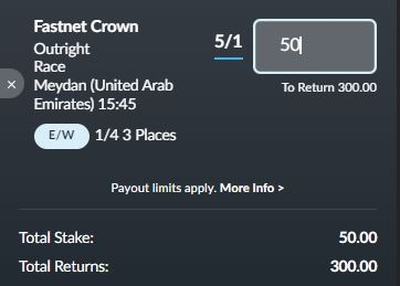 Not really.
With any bet type, the bigger the odds, the more you win.
But while with each-way betting for example you really want your selections to be going off at a certain price, with up-and-down betting that’s not the case.
Even if one or both of your horses were short odds, this technique can still allow you to potentially increase your winnings overall.
Once more for absolute clarity; this technique is about trying to stretch your betting bank and eke out as much of a return as possible from selections you already have.
To get those selections right in the first place, you’ll need to have good information (tips) and/or possess strong racing knowledge yourself.