
Many casual horse racing observers will hear us mention the ‘Classics’ from time to time, without fully understanding what they are.
Well, the Classics are a collection of five Group 1 races run on the Flat for the three-year-old generation only. The idea is that the five Classics, run over varying distances, represent the very zenith for racehorses within that age group.
Victory in a Classic race tends to lead to increased value at stud. The five races making up the Classics are:
- 2000 Guineas – mainly for the colts, run over a mile on either April 30 or more commonly the first Saturday in May at Newmarket.
- 1000 Guineas – run the day after the 2000 Guineas, this is the equivalent race for fillies.
- The Oaks – run on the last Friday in May (if June 1 falls on Saturday), or the first Friday of June. This is for fillies, run at Epsom Downs over a mile and a half.
- The Derby – run on the first Saturday in June over a mile and a half at Epsom. Fillies can enter, but rarely do.
- St Leger – the oldest Classic is run in mid-September over an extended 1¾ miles at Doncaster. Both colts and fillies take part.
Classic Timeline
- 1776: The first St Leger takes place at Doncaster.
- 1779: The inaugural Oaks is run at Epsom.
- 1780: After the 7th Earl of Derby won a coin toss, the new Classic to emulate the Oaks but for colts is run at Epsom in his name.
- 1809: Newmarket hosts the first 2000 Guineas, named for the amount of prize money given.
- 1814: A new 1000-guinea prize race was introduced for fillies, known as the 1000 Guineas Stakes.
2000 Guineas

At the risk of coming across a little snippy, it’s worth us reminding readers that this race is the 2000 Guineas, known colloquially as “The Guineas”. It is not the ‘English Guineas’. True, it has been replicated the world over, but this is the original race and doesn’t need its country’s preface.
The Guineas is run over the straight mile at Newmarket, on the Rowley Mile course. Some three-year-old colts run in trials such as the Greenham Stakes or the Craven beforehand, while many make this race their seasonal debut.
In fact, the vast majority of 2000 Guineas winners were top-class two-year-olds. This has led to many pundits calling this race “the last race of their juvenile season” for participants. There is something in that for sure, as these horses need to be Group 1 ready and be able to handle the rough and tumble of the event.
Many placed horses in the 2000 Guineas go on to run in the Irish version, and/or the St James’s Palace Stakes at Royal Ascot. The traditional route thereafter is the Sussex Stakes at Glorious Goodwood where they are likely to meet the older horses for the first time. Some go up in trip.
Another route, especially for Guineas winners, is to head to the Derby to see if they have the required stamina.
1000 Guineas

This race was introduced before the 2000 Guineas and is run under the same conditions; the straight one mile at Newmarket but for fillies only.
Once more, it tends to be a battle-hardened filly who wins the race.
Winners often head to the Oaks, or if staying over a mile the Coronation Stakes at Royal Ascot.
Once again, 1000 Guineas winners go on to be very valuable broodmares.
The Oaks
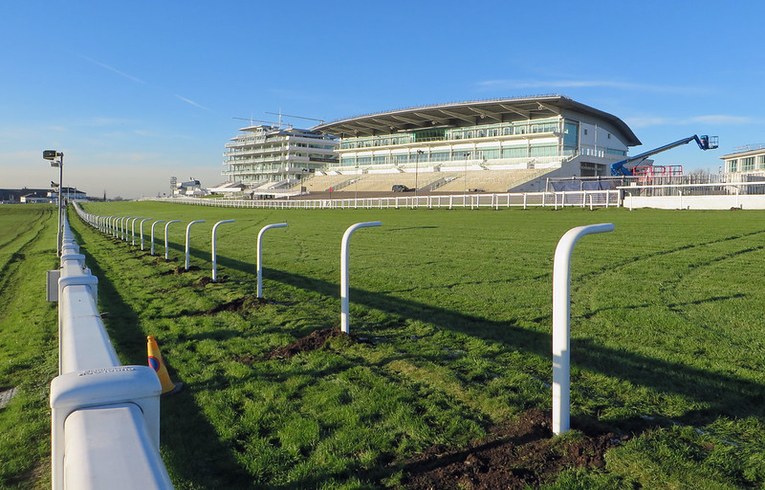
The Oaks was inaugurated before the Derby in fact, and is run over the same course and distance which is a mile and a half around Epsom Downs.
Oaks fillies tend to need plenty of stamina to get home and see the race out. Unlike in the 1000 Guineas, fillies with less experience can and do tend to do very well in this race.
Many head to trials at places such as Sandown (Classic Trial), Lingfield (Oaks Trial), Chester (Cheshire Oaks) or York (Musidora Stakes). After taking one or often two trials, they are usually race fit and ready to head to the Classic.
Oaks winners can often take on the colts and their elders later on in races such as the King George VI and Queen Elizabeth Stakes at Ascot, as well as the Prix de l’Arc de Triomphe in Paris. Some stick to racing their own sex for a while in the Irish Oaks and Yorkshire Oaks.
The Derby
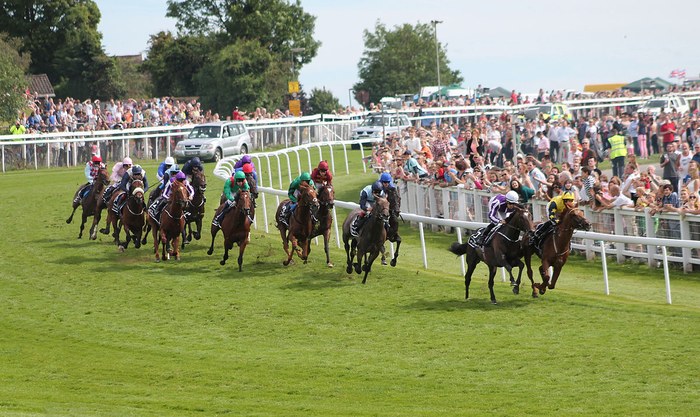

Again, this is “The Derby”, not the ‘English Derby’ or even the ‘Epsom Derby’ despite what some publications may write and what some in the game may say. This is the original.
In fact, the name Derby is interesting. The story goes that, when this new race for colts to emulate the Oaks was being dreamed up, it didn’t have a name. So, the Earl of Derby and guest Sir Charles Bunbury tossed a coin, with Derby winning and having the race named after him. Over at Newmarket, the Bunbury Cup is named after Sir Charles.
The Derby is always run on the first Saturday of June. It is considered the most important Classic and in fact the most important Flat race of the whole calendar in Britain.
Derby winners are crucial for the breeding industry. To win this race, horses need to have the speed to get into a good position early at the right-hand turn, then be able to keep that going with good tactical pace in the mid-part of the race.
That position will need to be held, as few winners come from very far back, before balance kicks in as the speed goes up when the field rounds Tattenham Corner and moves downhill. Then, the colts go back uphill towards the finish and have to see out 1½ miles at the end of all that.
The Derby therefore is the true test of a young thoroughbred which is why it is important to the very breed.
Derby winners can attempt to double-up in the Irish Derby, or go off to Paris. Some go to the King George at Ascot, while some go down in trip to the Eclipse at Sandown. Many will later attempt the Prix de l’Arc de Triomphe.
St Leger
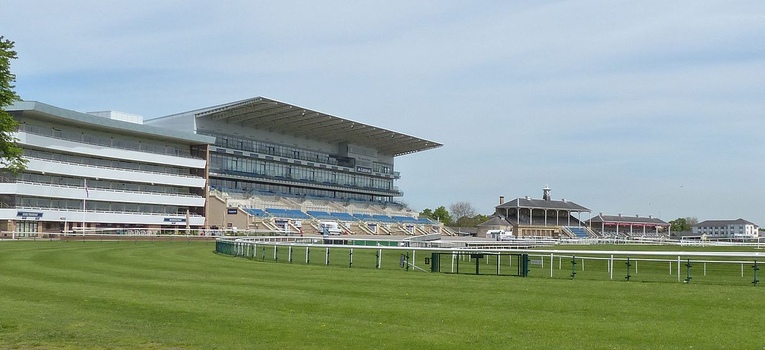
Though the oldest Classic of the lot, the St Leger is now the least fashionable and the last to be run in mid-September.
Its stock is once again rising in recent years, with more trainers targeting the race with their better middle-distance three-year-olds and not just the dour stayers.
The St Leger is a tough one, held at Doncaster and being run over one mile, six and a half furlongs.
Some winners of the Leger have come back down in trip to a mile and a half, while others go on to be bona fide stayers in the two-mile division from their four-year-old year onwards.
The Triple Crown

Winning the Triple Crown in the USA is difficult enough, but yet remains infinitely easier than doing so in Britain.
Finding a horse with the speed to win over a mile in either Guineas in early May and then winning an Oaks or a Derby is terribly difficult. Finding one to do that and then also win the 1¾-mile St Leger in September seems nigh impossible.
It has been done, but not for a long time.
The last colts Triple Crown winner was the great Nijinsky who won the 2000 Guineas, the Derby and the St Leger way back in 1970. The last filly to do the 100 Guineas-Oaks-St Leger treble was Oh So Sharp in 1985.
Few trainers even attempt the Triple Crown now, though an all-new Triple Crown winner in Britain would be immensely valuable and a great fillip for the sport.
Where the Classics Have Been Replicated

Britain’s Classics have been replicated all around the world. We all know about Ireland’s version of all five, while the Kentucky Derby remains the biggest race in the States bar none. Here are some of the territories to have replicated Britain’s Classic races:
USA
The pinnacle of the three-year-old structure in the States is the Kentucky Derby, run over 1¼ miles in early May. A Kentucky Oaks has been added also.
In preparation for the Kentucky Derby, many runners take in such events as the Santa Anita Derby, the Arkansas Derby or the Florida Derby.
Ireland
Ireland has a 1000 Guineas, 2000 Guineas, a Derby, an Oaks and indeed a St Leger. All five races are hugely important these days for the European Pattern. Some horses are trained specifically for these events, rather than taking in the Classic in England as a priority.
France
The one-mile Poule d’Essai des Poulains and Poule d’Essai de Pouliche are essentially France’s 2000 and 1000 Guineas. The Prix de Jockey Club is the “French Derby” and the Prix de Diane is the “French Oaks”.
Central Europe
The Derby Italiano, the Premio Parioli (2000 Guineas) and the Deutsches Derby are just some of the races around Europe mirroring the Classics hosted in Britain.
Australia
In Australia, a number of the Classics have been replicated in different territories. The Australian Derby is a Group 1 at Randwick, while the Australian Oaks and Australasian Oaks both take place as well as Australian Guineas, Rosehill Guineas and many other similar races all take place.