• Skip to primary navigation
  • Skip to main content
  • Skip to primary sidebar

HorseRacingBettingSites.co.uk

Horse Racing Betting Sites

  • Home
  • Bookmakers
  • New Sites
  • Free Bets
  • Betting Guides
  • Racing Terms
  • Racecourses
  • Meetings
  • Horses

Winning Distance Betting

Winning Distance Betting

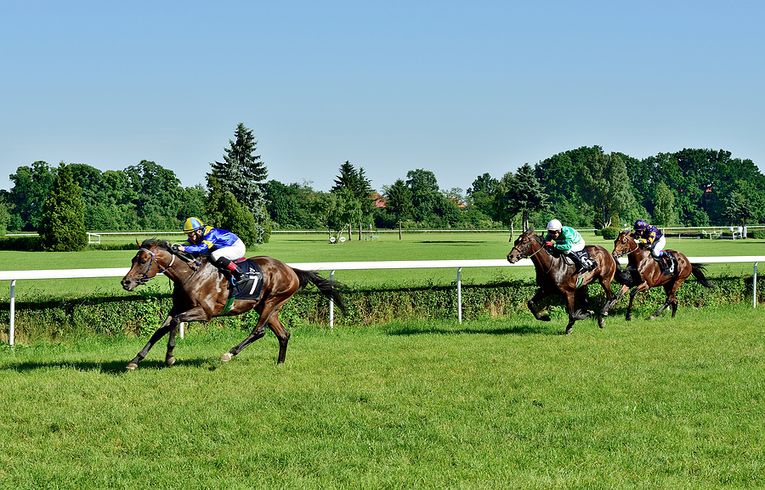
Winning distances are essentially how we measure success in horse racing, rightly or wrongly.

Finishing margins between runners at the line help punters and handicappers decipher how good one horse was versus another.

Even the most casual of watchers will understand that, broadly speaking, we deal in ‘lengths’. A length is a nice, easy to understand term and was used as a standard measurement based on – you guessed it – the length of a horse. But how long is a horse?

It’s hard to simply say a length is a length because it isn’t, and not just in the literal sense. How fast a race is, how quick a horse is finishing and how much effort is being put in at the line can skew the figures. A horse winning by one length could have been way more impressive than another winning by four.

Punters have to use this information to be better informed when having a bet. Now, you can even bet on the margin of victory, i.e., ‘winning distance betting’.

Of course, there are much more finite measurements than lengths. Horse races can be very close to call after all. Here is a list of official winning margins used in racing:

  • Dead Heat – two horses finishing exactly side-by-side. Printed as (DH).
  • Nose (N)
  • Short-Head (SH)
  • Head (H)
  • Neck (NK)
  • Quarter of a length (1/4 L)
  • Half-a-length (1/2 L)
  • Three-quarters of a length (3/4 L)
  • A length (1 L)

And so on.

How Distances Are Measured and Calculated

Beverley Racecourse
Beverley Racecourse

To help you better process winning distances before betting on them, we’ll take you through how they are worked out in the modern day.

Distances are based on time these days, rather than any visual aspect. There is a lengths-per-second scale, running differently for the flat, the All Weather and the jumps with the going included as another variable.

For example, in a jumps race run on heavy ground we can expect the runners to be relatively slow. This means the lengths-per-second scale would be at its lowest level which is four lengths per second.

Therefore, a runner crossing the line 2.75 seconds behind another horse would be listed as having finished 11 lengths behind.

Despite allowances for the going and the code, the distance of the race is astonishingly NOT factored in.

This means that on the flat on good ground, the same lengths-per-second calculation would be used for a five-furlong dash as that used for a two-mile stayers’ race, despite the fact that runners will no doubt be finishing at very different speeds. Always keep that in mind.

Betting on Winning Distances

There are fine margins involved here. One length is around 8 feet and on the scale at its quickest point, good or faster turf ground on the flat, equates to around 0.16 seconds.

Winning distance betting therefore can be complicated. A horse may put in an average winning performance, but the others may finish tired with jockeys not exactly knocking their mount about to close in the final stages.

Conversely, a well-handicapped horse can sweep by the field late on and just get there on the line to win by a neck. It may be very much the superior horse in the race, but doesn’t need to win by miles to prove it and you must keep that in mind when entertaining a winning distance bet.

Bet Types Available

Winning Distance Betting Markets

You can bet on winning distances in a couple of ways.

Firstly, there are the aggregate winning distances markets. A bookmaker will set their line, a total of combined winning distances for the whole day, and you can bet on the total being over or under the line.

Naturally on good ground with some sprints involved, you’d expect the total distances to be small while over jumps on softer ground, the distances could be very great.

The better way to bet on winning distances is by boosting your single bet with a good bookmaker. Many bookies now offer normal prices on horses in each race, though offer an odds increase if you take said horse to win by a certain minimum number of lengths.

So, for example, a horse listed at 2/1 may be offered at 5/2 to win by 1 length or more. It may be offered at 3/1 to win by 2½ lengths or more and so on.

When to Bet on Distances

Horse Race neck and Neck

Trainers and jockeys are notorious for looking after a horse’s handicap mark and/or keeping expectations down.

With this in mind, they do not expect their horses on a daily basis, even when good enough, to be pushed out to win their race by as many lengths as possible. That’s why you shouldn’t bet on winning distances on a daily basis.

There are exceptions. When it comes to a major race or festival, such as the Derby, the Cheltenham Festival or end of season events like Champions Day, jockeys no longer have to ‘look after’ their horse and they are free to show if its talents to the max.

Only on major race days should you contemplate betting big on winning distances, especially if you expect the margins to be wide.

Primary Sidebar

Bet Types

  • Ante Post Betting
  • Back to Lay
  • Betting Without
  • Best Odds Guaranteed
  • Each Way Edge
  • Each Way Accumulators
  • Forecast & Tricast Betting
  • Full Cover Bets
  • Cash Out
  • Lay Betting
  • Lengthen the Odds
  • Totepool Betting
  • Unnamed Favourite
  • Flag or Super Flag Bets
  • Round Robin Bet
  • Alphabet Bets
  • Up and Down Bet
  • Starting Price
  • Win, Place & Each Way Betting
  • Winning Distance Betting

Racing Guides

  • Dead Heats
  • Draw Bias
  • Flat v National Hunt
  • Handicapping
  • Grades & Classes
  • Horse Racing Rules
  • Horse Ages
  • How to Bet
  • Calculate the Payout of a Bet
  • One Horse Races
  • Non Runners
  • Reading Form
  • Reserve Horses
  • The Going
  • Race Distances
  • Weights
  • Brought Down
  • Fallers
  • Pulled Up
  • Unseated Rider
  • No Horses in a Race
  • What is a Bumper Race?
  • What Is a Co-Favourite in Horse Racing?
  • What is the Non-Triers Rule?

Races & Courses

  • All Weather Racing Championships
  • All Weather Racing
  • Amateur Races
  • Harness Racing
  • Major Races
  • Racecourse Surfaces
  • Street Racing
  • Richest Races in Racing
  • Types of Race
  • Longest Races
  • Shortest Races
  • Difference Between Fences and Hurdles

General Info

  • Amateur Racing
  • What are "The Classics" in Racing?
  • Can a Jockey Remount After a Fall?
  • Can a Jockey Own the Horse?
  • Can Jockeys, Trainers & Owners Bet?
  • Contaminated Horse Feed
  • Do Horses Usually Have the Same Jockey?
  • Floodlit Racecourses
  • Headgear
  • Horse Racing Bites
  • Horse Racing Cheats
  • People in Racing
  • How Many Races Can a Horse Run in a Day?
  • How Much Do Jockeys Earn?
  • How Often Does a Horse Race?
  • How to Buy a Racehorse
  • Is Horse Racing Fixed or Fair?
  • Jockey Silks
  • Jockeys Weighing in and Out
  • Ladies Days
  • Expensive Racehorses
  • Naming a Racehorse
  • Prize Money
  • Summer Jump Racing
  • Life Stages of Race Horse
  • The Queen and Horse Racing
  • Types of Horses
  • What is a Foal, Filly and Colt?
  • What is a Gelding?
  • What is a Mare in Horse Racing?
  • What is a Ringer in Horse Racing?
  • What is Dutching?
  • What to Wear to the Races
  • Horse Breeds
  • Famous Horses

Courses By Area

  • Berkshire
  • Devon
  • England
  • Ireland
  • London
  • Norfolk
  • Northern Ireland
  • Scotland
  • Surrey
  • Sussex
  • Wales
  • Yorkshire
  • Kent
  • Racecourses

    • Aintree
    • Ascot
    • Ayr
    • Ballinrobe
    • Bangor-on-Dee
    • Bath
    • Bellewstown
    • Beverley
    • Brighton
    • Carlisle
    • Cartmel
    • Catterick
    • Chelmsford City
    • Cheltenham
    • Chepstow
    • Chester
    • Clonmel
    • Cork
    • Curragh
    • Doncaster
    • Down Royal
    • Downpatrick
    • Dundalk
    • Epsom
    • Exeter
    • Fairyhouse
    • Fakenham
    • Ffos Las
    • Fontwell Park
    • Galway
    • Goodwood
    • Gowran Park
    • Great Yarmouth
    • Hamilton Park
    • Haydock
    • Hereford
    • Hexham
    • Huntingdon
    • Kelso
    • Kempton Park
    • Kilbeggan
    • Killarney
    • Laytown
    • Leicester
    • Leopardstown
    • Limerick
    • Lingfield Park
    • Listowel
    • Ludlow
    • Market Rasen
    • Musselburgh
    • Naas
    • Navan
    • Newbury
    • Newcastle
    • Newmarket
    • Newton Abbot
    • Nottingham
    • Perth
    • Plumpton
    • Pontefract
    • Punchestown
    • Redcar
    • Ripon
    • Roscommon
    • Salisbury
    • Sandown Park
    • Sedgefield
    • Sligo
    • Southwell
    • Stratford
    • Taunton
    • Thirsk
    • Thurles
    • Tipperary
    • Uttoxeter
    • Warwick
    • Waterford & Tramore
    • Wetherby
    • Wexford
    • Wincanton
    • Windsor
    • Wolverhampton
    • Worcester
    • York

    Major Meetings

    • Guineas Meeting
    • Aintree Becher Chase Day
    • Ascot King George Diamond Weekend
    • Ayr Gold Cup Day
    • Ayr Scottish Grand National
    • British Champions Day
    • Cambridgeshire Meeting
    • Cheltenham Festival
    • Cheltenham Festival Trials Day
    • November Meeting
    • Welsh Grand National Day
    • Chester May Festival
    • Epsom Derby Festival
    • Glorious Goodwood
    • Grand National Festival
    • Kempton Christmas Festival
    • Leopardstown Dublin Racing Festival
    • Newmarket Craven Meeting
    • Newmarket Future Champions Festival
    • Newmarket July Festival
    • Royal Ascot
    • Sandown Coral-Eclipse Meeting
    • Sandown Tingle Creek Day
    • St Leger Festival
    • York Dante Festival
    • York Ebor Festival

    You must be 18 or older to bet online. Please bet responsibly. For problem gambling see Gamstop.co.uk or GambleAware.org. All bookmakers listed are licensed by the UK Gambling Commission.

    Copyright © 2026, do not reproduce without permission. Contact Us Here